
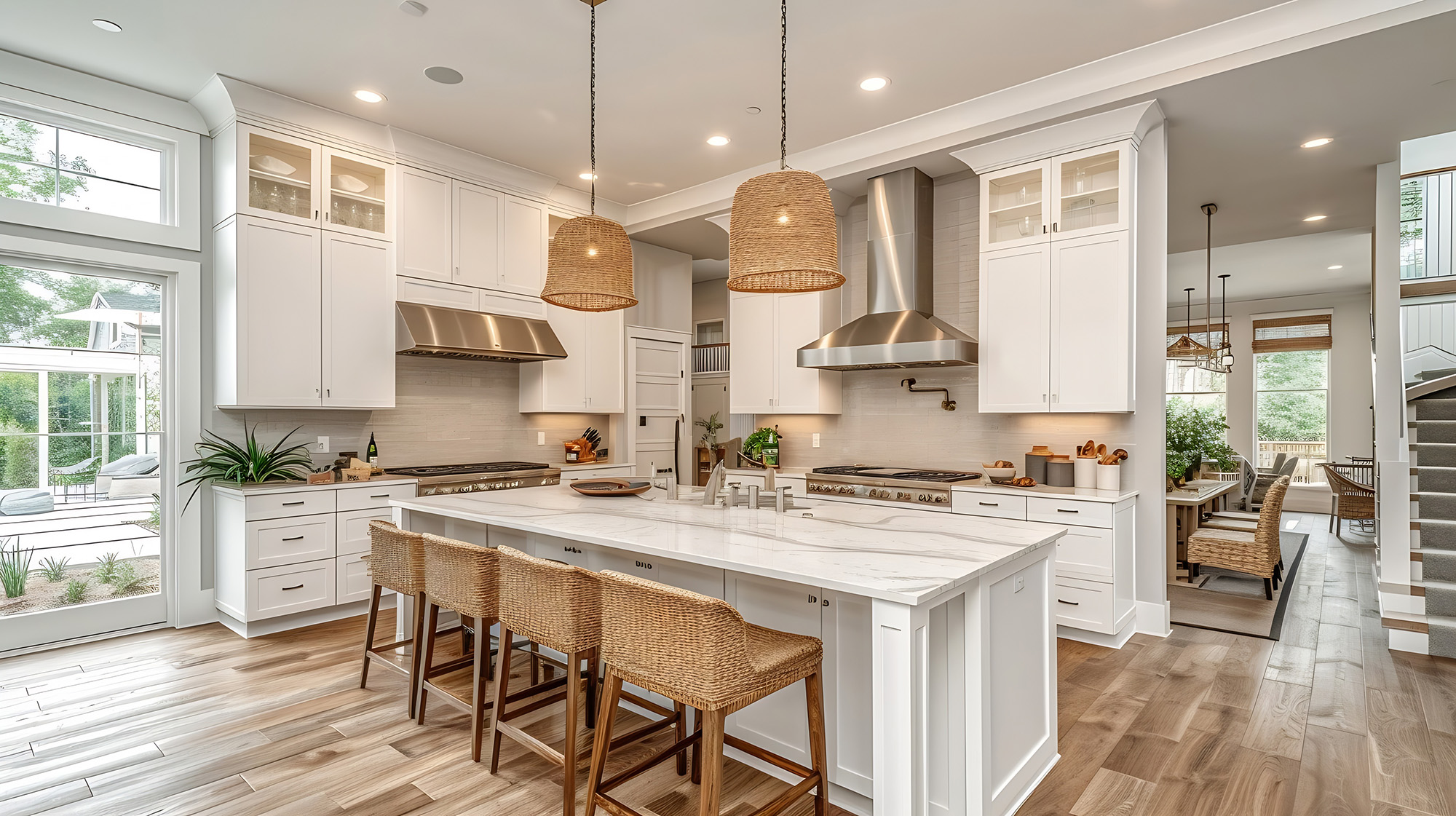
Every time Versant adjusts its rates, your kitchen lighting gets a little more expensive to run, even though nothing about it changed. Lighting accounts for roughly fifteen percent of a typical home's electricity use, and the kitchen is usually the brightest, longest-lit room in the house. The good news is that this is one of the easiest line items to shrink.
Let me show you how to figure out what your current setup costs, then where the waste tends to hide.
How to Calculate What a Fixture Really Costs
The math is simpler than the utility bill makes it look. Take a fixture's wattage, multiply by the hours you run it, and divide by one thousand to get kilowatt-hours. Multiply that by your rate, which in Maine now sits around twenty-seven cents per kilowatt-hour, well above the national average.
A bank of six fifty-watt halogen recessed lights run four hours a night is 1.2 kilowatt-hours daily. Over a year that is more than 130 dollars just for that one row of cans. Swap them for ten-watt LEDs and the same light costs you under thirty dollars. The light output barely changes. The bill does.
Where the Waste Hides in a Maine Kitchen
Older kitchens almost always carry hidden energy drains. Halogen puck lights under cabinets get hot and burn watts. Aging recessed cans often still hold incandescent or halogen bulbs. And a single switch controlling every light in the room means you light the whole kitchen just to grab a glass of water.
The other quiet cost is over-lighting. Many kitchens run far more wattage than the task actually needs because the layout was never zoned. Lighting the room in layers, with separate control over task, ambient, and accent, means you only pay for the light you are using at any moment.
The Upgrades That Pay You Back
A few targeted changes deliver most of the savings, and they make the kitchen more pleasant to use at the same time.
LED everything, which uses seventy-five to ninety percent less energy than the bulbs it replaces and lasts for years.
Dimmers on the right drivers, so you can pull warm, low light in the evening and full task light when you cook. Dialing down at night is also one of the easiest ways to soften a kitchen without losing function.
Zoned switching and under-cabinet task lighting, so you light the counter without lighting the ceiling.
At Atlantic Designs we plan these layers around how you actually use the room, so the savings are real and the kitchen looks better lit, not darker.
You should not have to choose between a comfortable kitchen and a manageable power bill. The right LED layout gives you both, and it pays for itself faster every time rates climb. The team at Atlantic Designs serves Bangor, Ellsworth, Lincoln, Newport, and Camden, ME and can design a lighting plan that fits your space and your budget.
Visit Holden, ME or contact us today to see efficient kitchen lighting in person and start cutting what you pay every month.


