
Bathroom lighting is often selected too late in the design process. Homeowners spend time on flooring, tile, vanities, and fixtures, then choose lighting based mainly on looks. The result is often a bathroom that photographs well but performs poorly during real routines.
Good bathroom lighting needs to support grooming, skincare, shaving, makeup, cleaning, and late-night use. That means the technical side matters just as much as the style.
Start with CRI for accurate color
CRI stands for Color Rendering Index. It measures how accurately a light source reveals color compared with natural light. In a bathroom, this matters because people use mirrors for tasks that depend on true color perception.
If the CRI is too low, skin tone can look dull, gray, or uneven. Makeup application becomes less reliable. Paint colors, countertop tones, and flooring undertones may also look off.
For bathrooms, a CRI of 90 or higher is a strong target, especially around the vanity. A bright light with poor CRI can still make the room feel wrong.
Choose a Kelvin temperature that fits the room
Kelvin measures color temperature. Lower Kelvin numbers create warmer light. Higher Kelvin numbers create cooler, whiter light.
Most bathrooms work well in the 2700K to 3000K range if the goal is warmth and comfort. A range closer to 3000K to 3500K can suit homeowners who want a cleaner, more neutral appearance. Once bathroom lighting goes much cooler than that, many spaces start to feel sterile rather than fresh.
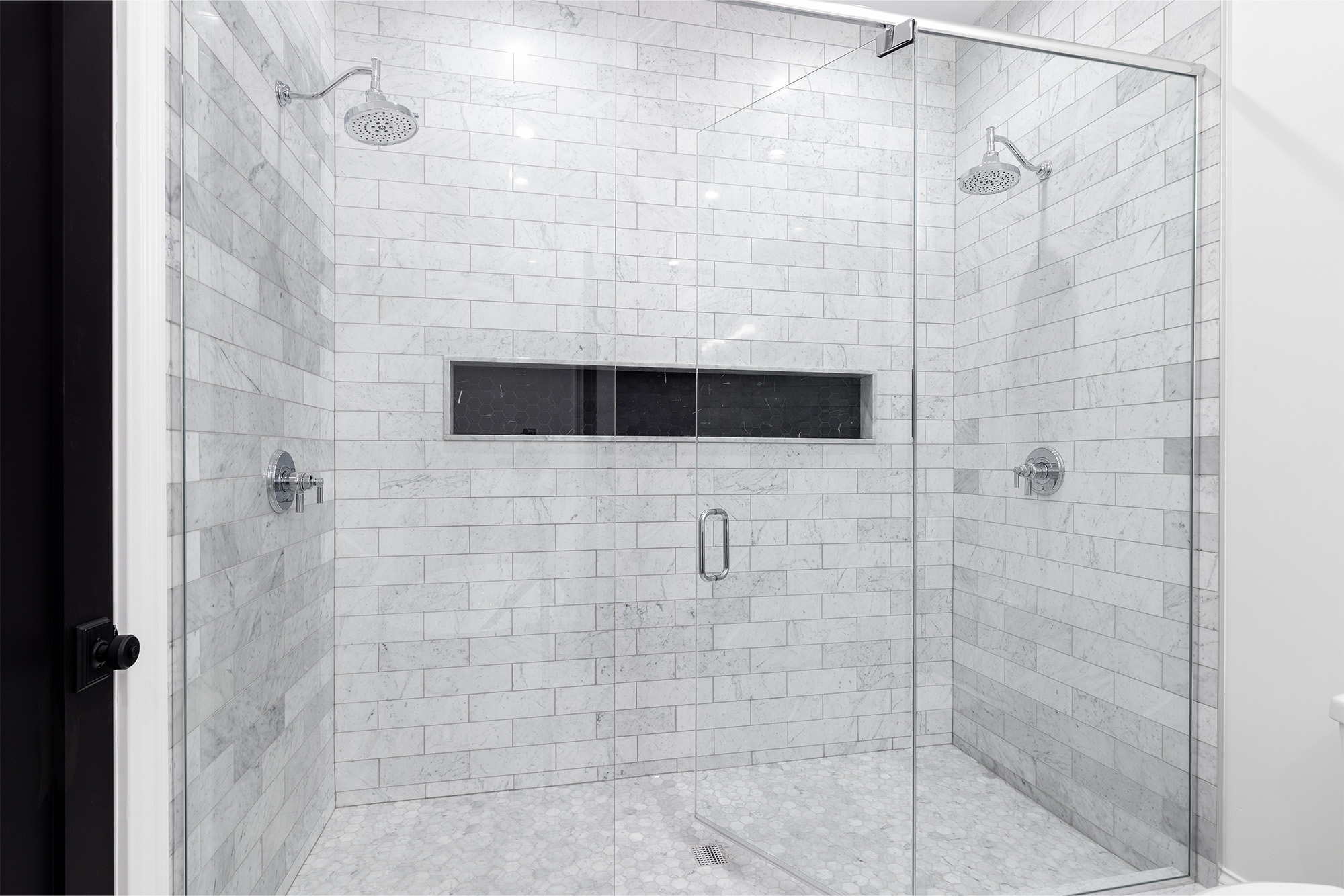
This matters even more in bathrooms with white tile, glossy surfaces, mirrors, and chrome. Those finishes amplify cool light fast.
Mirror lighting placement is where most bathrooms go wrong
One of the most common mistakes is depending on a single overhead light above the mirror. That setup often creates shadows under the eyes, nose, and chin because the light is coming from above rather than from the front.
The most flattering and practical setup usually involves vertical fixtures placed beside the mirror. Side lighting distributes light more evenly across the face, which improves visibility for grooming and reduces harsh shadowing.
If side sconces are not possible, an over-mirror fixture can still work, but it needs the right width, output, and diffusion. Placement matters. A poorly positioned bar light can create glare in the mirror while still failing to light the face properly.
Layer the bathroom like a real-use space
Bathrooms need more than vanity light. They need layered lighting.
Ambient lighting provides overall visibility for the room. Vanity lighting supports face-level tasks. Accent or low-level lighting can improve nighttime comfort, especially in larger bathrooms or primary suites.
This layered approach is important because bathrooms are used at different times and in different ways. Morning routines may need brighter, clearer light. Evening routines usually benefit from a softer, calmer setting. Dimmers can help one room serve both purposes.
Reflective materials can make bad lighting feel worse
Bathrooms have a high concentration of reflective surfaces: mirrors, tile, glass, polished countertops, and plumbing trim. That means harsh lighting becomes obvious fast.
A poorly aimed fixture can bounce directly into the mirror. Cool bulbs can make the whole room feel sharp and uncomfortable. Glossy surfaces can amplify hot spots instead of distributing light evenly.
That is why bathroom lighting should aim for controlled, useful illumination rather than raw brightness. More output is not always the answer. Better distribution usually is.
Lighting should support the finishes in the room
Lighting does not exist separately from materials. Wood vanities, gray flooring, white quartz, brushed brass, matte black hardware, and wall paint all respond differently under different bulbs.
The wrong color temperature can flatten warm finishes or exaggerate cool undertones. Low-quality light can make premium materials look cheaper than they are. That is why lighting decisions should be made in context with flooring, surfaces, and overall bathroom color direction.
The best bathroom lighting starts with function. A high-CRI source, the right Kelvin range, and better mirror placement can dramatically improve how the room feels and performs every day. Once those technical pieces are right, the decorative choices become easier and more successful.
To compare bathroom lighting and flooring together, visit The Kitchen People showroom at 224 Main Rd, Holden, ME 04429. The showroom serves Bangor, Ellsworth, Lincoln, Newport, and Camden, ME, with products and design support for kitchens and bathrooms. Contact us to create a bathroom that works better in real life, with lighting that supports comfort, accuracy, and finish quality.