
Heat pumps have become the default heating upgrade across coastal Maine, and Camden is no exception.
Before you finalize a flooring choice for a heat pump home, here is what actually matters for comfort, energy use, and how the floor performs day to day.
How Heat Pumps Change the Heating Equation
Unlike a baseboard or radiant system that warms a room from a fixed point, a ductless heat pump moves conditioned air across the room from a wall or ceiling unit. That means the floor is not being heated directly, and the material you choose plays a bigger role in how warm or cold the room feels underfoot than it would with radiant heat.
This matters most in rooms with only one or two heat pump heads, which is common in additions, primary suites, and open concept renovations around Camden. A floor that feels cold to the touch will make the room feel underheated even when the thermostat reading is perfectly comfortable, simply because of how the material conducts heat away from bare feet.
Which Materials Perform Best
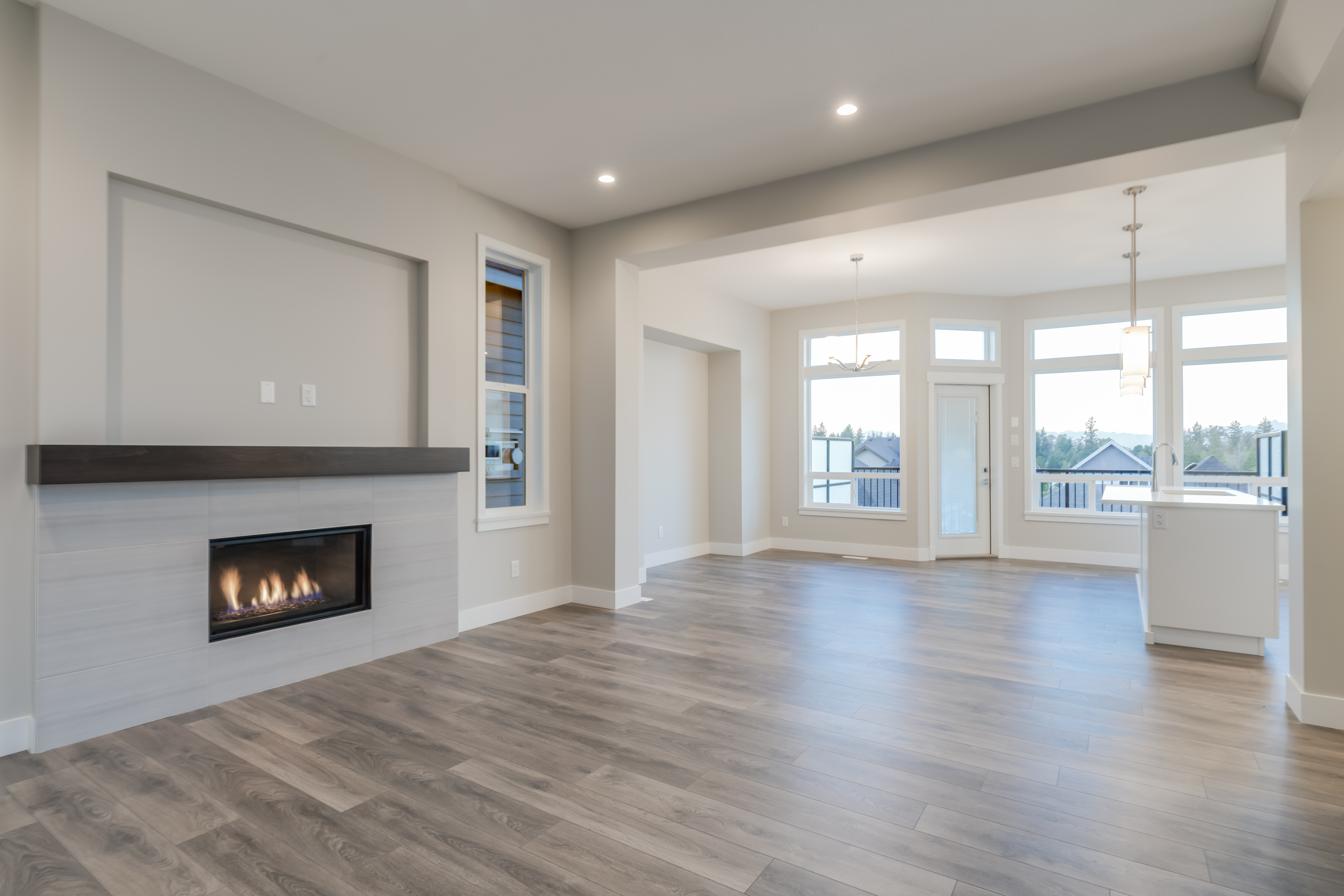
Engineered hardwood and luxury vinyl plank both perform well in heat pump homes because they retain a moderate surface temperature and do not feel shockingly cold compared to stone or tile. LVP in particular has a stable core that resists the temperature swings coastal Camden homes see between a humid summer and a dry heat pump winter.
Solid hardwood works too, but it is more sensitive to the drier air a heat pump can produce during winter operation, since heat pumps do not add humidity to a space the way some older heating systems incidentally did. If solid hardwood is the look you want, pairing it with a whole home humidifier keeps the wood stable and prevents the small gapping that dry winter air can cause.
Where Tile and Stone Need Extra Thought
Tile and natural stone are popular for their durability and look, but both conduct heat away from feet quickly, which can make a heat pump heated room feel cooler than the thermostat suggests. That does not rule tile out, but it does mean the room's heat pump capacity should account for it.
Homeowners who want tile in a heat pump home, particularly in bathrooms or mudrooms, often pair it with a thin electric radiant mat underneath.
This is a smaller, separate system from the heat pump itself and solves the cold floor problem directly without changing the whole home heating plan.
Getting the Heat Pump Sizing Right
Flooring choice alone will not fix an undersized heat pump, so it is worth having your HVAC contractor confirm the unit is sized for the room's square footage and ceiling height before finalizing flooring. A correctly sized heat pump paired with the right flooring material is what actually delivers even, comfortable heat through a Camden winter.
This is also the point in a renovation where it helps to loop in your flooring supplier early rather than after the heat pump is already installed. Underlayment choice, subfloor prep, and even the direction planks run relative to the heat pump's airflow can all affect how evenly a room heats.
Plan Your Flooring Around Your Heating System
Getting flooring and heating to work together takes more than picking a material you like the look of. Atlantic Designs helps homeowners across Bangor, Ellsworth, Lincoln, Newport, and Camden, ME choose flooring that performs well alongside heat pump systems, from engineered hardwood to waterproof LVP built for coastal Maine's humidity swings.
Visit us at Holden, ME to feel the difference between flooring options firsthand and talk through your home's heating setup with our design team. We work with homeowners renovating in Camden, Bangor, Ellsworth, Lincoln, and Newport who want a floor that actually feels warm, not just one that looks good in photos.
Planning a renovation around a heat pump system? Contact us to talk through the best flooring fit, or browse our flooring selection to start comparing materials.


