
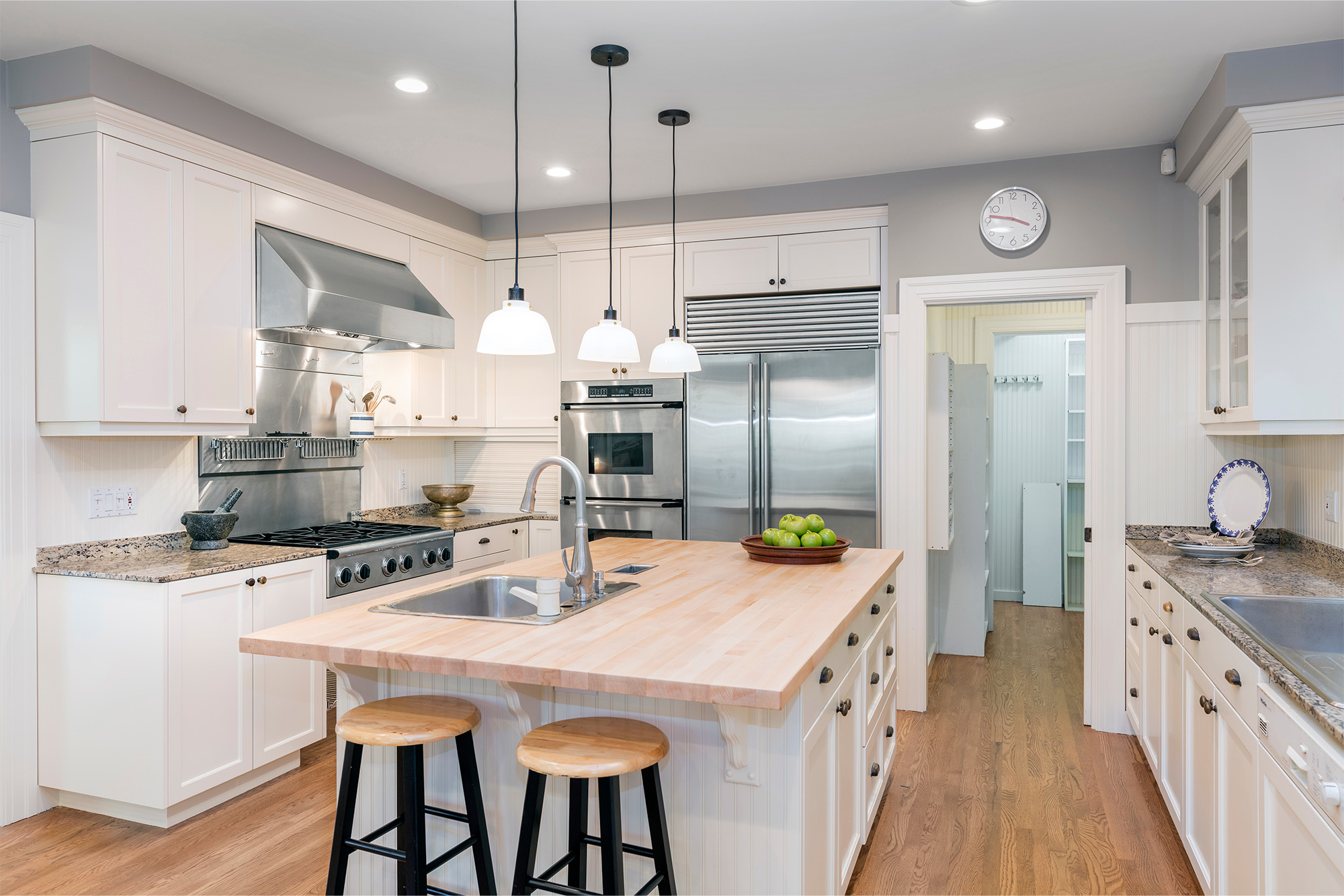
If you’ve ever felt a late-night headache kick in while cleaning up, cooking, or scrolling your phone in the kitchen, lighting may be the quiet culprit. Flicker is not just the obvious strobe you can see. Many LEDs “pulse” at frequencies your brain and nervous system still register, especially when you dim them or pair them with the wrong control.
Kitchens amplify the problem because:
Light levels are high and close to your eyes (under-cabinet strips, downlights over counters).
Surfaces are reflective (quartz, glossy tile, stainless steel) which increases perceived glare and flicker sensitivity.
You often use dimming at night, exactly when many LED systems become “flicker-iest.”
Quick definitions: modulation, flicker frequency, and why you care
Flicker is basically light output changing over time. Two technical pieces matter:
Frequency (Hz): How fast the light pulses. Higher can be “less visible” but still biologically irritating.
Modulation depth (%): How big the swing is between bright and dim.
A light that pulses at a high frequency with a tiny modulation depth is typically more comfortable than a light with deep modulation, even if both “look fine.”
IEEE 1789 in plain English
IEEE 1789 is a recommended practice for modulating current in high-brightness LEDs to reduce health risks. It doesn’t certify products, but it gives useful boundaries.
Here’s the practical takeaway: the lower the modulation depth, the better, and “safe” thresholds get stricter at lower frequencies. If a manufacturer can provide flicker metrics aligned with IEEE 1789 guidance, it’s a strong sign they’ve engineered the driver properly, not just slapped “dimmable” on a box.
PWM dimming: the #1 reason dimmed LEDs feel awful
PWM (Pulse Width Modulation) dimming works by switching the LED fully on and off rapidly. Dimming happens by changing the on-time vs off-time.
PWM can be okay if it’s very high frequency and well-implemented.
PWM becomes a problem when the frequency is low (or effectively low due to interaction with a dimmer/driver), or when the duty cycle creates deep modulation at the exact levels you use at night.
A common failure mode in kitchens: you dim to 10–30% for evening cleanup, the driver switches into a different operating mode, and flicker suddenly spikes.
TRIAC, ELV, 0–10V, and “why is this buzzing?”
Many Maine homes have legacy wall dimmers. Pairing modern LEDs with old controls is where comfort goes to die.
TRIAC/forward-phase dimming: common in older setups. Some LED drivers handle it well, many don’t.
ELV/reverse-phase dimming: often smoother for LEDs, but requires compatible drivers.
0–10V: usually more stable for flicker and performance, more common in commercial-grade systems.
Smart dimmers: can still cause issues if the LED driver isn’t designed for that control type.
Buzzing, shimmer, stepping, or “light wobble” at low dim levels is often a driver/dimmer compatibility issue, not “bad bulbs.”
The low-flicker kitchen spec checklist
When The Kitchen People designs or recommends kitchen lighting, we’re looking for proof, not vibes. Ask for:
Flicker metrics:
Percent Flicker or Flicker Index, and ideally data at multiple dim levels
Any reference to IEEE 1789 or “flicker-free” testing methodology
Driver details:
Constant-current driver quality (not just “dimmable”)
Stability down to low dimming (5–10% without shimmer)
Dimming compatibility list:
конкрет models of dimmers tested by the manufacturer
Under-cabinet strips:
Prefer quality 24V systems with proper drivers over bargain plug-in supplies
Use aluminum channels + diffusers to reduce hotspot glare (which makes flicker feel worse)
Avoid mixing “random” LED parts:
A good strip with a cheap driver can still flicker
A good driver with incompatible dimmer can still flicker
Simple tests you can do tonight
Phone slow-motion test: point your camera at the light and record slow-mo. If you see dark bands, there’s modulation.
Peripheral vision sweep: look slightly away and move your hand; visible strobing can indicate flicker.
Dim-level check: test at the low settings you actually use at night.
These are screening tools. Real specs come from manufacturer data and proper measurement.
If your kitchen feels “too intense” at night, don’t assume it’s just brightness. Flicker and dimming behavior are often the hidden drivers of headaches and nighttime fatigue. The good news is: once you spec a low-flicker driver, compatible dimmer type, and a layered lighting plan, evening kitchen light can feel calm, smooth, and genuinely comfortable.
Service areas: Holden, Bangor, Ellsworth, Lincoln, Newport, and Camden, Maine.
Want a kitchen lighting plan that’s bright when you need it and genuinely low-flicker at night? Visit us or contact The Kitchen People in Holden, ME and we’ll help you select fixtures, drivers, and dimming controls that perform in real homes, not just on a spec sheet.


