
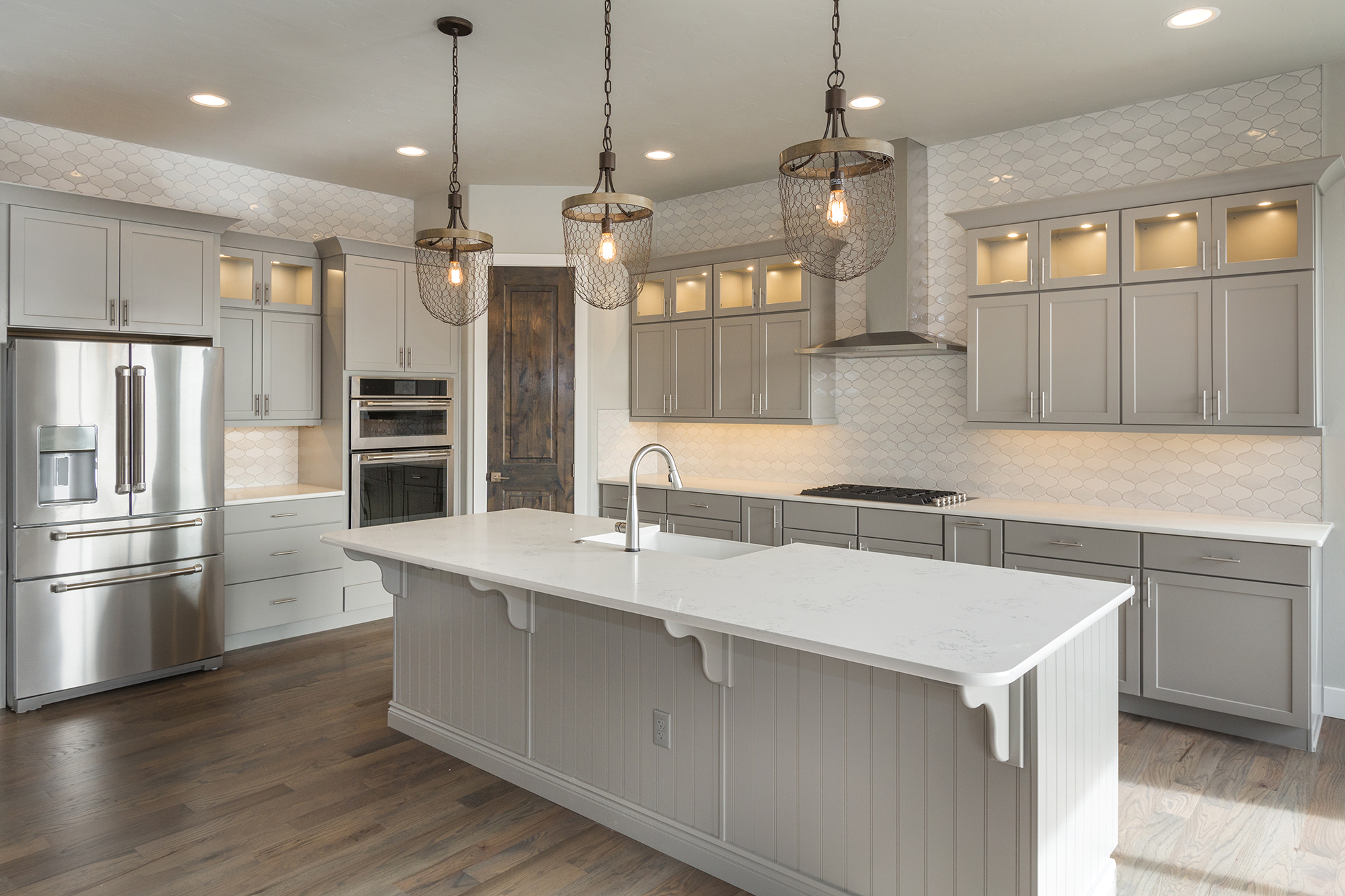
Color temperature (CCT) is the Kelvin number on the box, but what you experience is the result of that light mixing with your finishes. In real kitchens, the same 3000K fixture can feel warm and cozy in one home, and sharp and clinical in another, because:
Reflectance changes perception: glossy quartz and bright backsplashes throw light back at you.
Undertones amplify: warm oak pulls warmth forward; gray LVP can make warm light look yellow.
Layering matters: recessed downlights + under-cabinet strips + pendants can mix CCTs and create “patchy color.”
The goal is not “pick one Kelvin.” The goal is choose a CCT strategy that matches your materials and your day-to-night use.
Quick CCT cheat sheet
2700K: warm, cozy, more “lamp-like.” Great for night scenes and wood-rich kitchens. Can make whites look creamy.
3000K: balanced warm-neutral. Often the safest “kitchen all-rounder.”
3500K: neutral-to-crisp. Can look clean and bright, but can also feel sterile if optics/glare are poor.
CCT alone doesn’t guarantee good color. Two more specs matter a lot:
CRI (aim 90+ for kitchens)
R9 (reds) ideally strong so food doesn’t look dull and skin doesn’t go gray.
Real-kitchen tests that beat showroom guessing
Before you commit, test samples in your kitchen, at the hours you actually live there.
Night test (8–11pm): does the space feel calm or “wired”?
Food test: slice a tomato, look at greens, check if meat looks gray. Poor reds show up fast.
Skin test: in a mirror, does your face look healthy or sallow?
Finish test: look at cabinet doors and floor undertones. Do warm woods look orange? Do gray floors look green?
If you only test in midday light, you’ll miss the problem that makes people hate their lighting: evening perception.
Best CCT picks by kitchen style
1) Wood floors or warm wood tones (oak, maple, walnut):
Start with 3000K as the daytime baseline.
Add an evening scene at 2700K or warm-dim for comfort.
Why: 2700K can push warm woods into “too amber,” especially with glossy finishes. 3000K keeps it clean without fighting the wood.
2) White cabinets + white/gray quartz + glossy backsplash (high reflectance):
Usually best at 2700K or 3000K, not 3500K.
Why: highly reflective surfaces plus higher CCT can feel glaring and clinical. If you want “crisp,” use better optics and layering, not just higher Kelvin.
3) Gray LVP or cool-toned tile floors:
Often 3000K is safest.
Be cautious with 2700K if your gray has blue/green undertones (it can read yellow).
Why: cool floors can make warm light look “muddy.” 3000K splits the difference.
4) Contemporary kitchens aiming for ultra-clean brightness:
3500K can work if (and only if) you control glare and ensure high color quality.
Use 90+ CRI and verify R9 performance.
Why: 3500K can look amazing in a well-designed layered plan, but it punishes cheap drivers/optics and reveals mismatched undertones fast.
The “mixed CCT” trap
Many kitchens accidentally mix:
3000K recessed lights
4000K under-cabinet
2700K pendants
The result is a room that feels visually inconsistent and “busy.” If you want flexibility, do it intentionally:
Keep daytime layers in the same neighborhood (often 3000K).
Create an evening scene using warm-dim or dedicated 2700K circuits (toe-kick, soft vertical lighting).
Avoid having one zone jump 1000K from another in the same sightline.
What we recommend most often (and why)
For many Maine kitchens, a high-performing default strategy is:
3000K for primary task + ambient, 90+ CRI, good R9
Warm-dim or 2700K layers for evening, especially toe-kick and soft vertical light
This gives you a kitchen that feels clean and functional at 10am, and comforting at 10pm without looking “yellow” or “hospital.”
CCT is a design decision and a technical decision. In real kitchens, 2700K/3000K/3500K behaves differently depending on floors, countertops, reflectance, and how you dim at night. If you test with real food, real mirrors, and real evening scenes, you’ll pick a CCT strategy that looks right for years, not just under showroom lights.
Service areas: Holden, Bangor, Ellsworth, Lincoln, Newport, and Camden, Maine.
For a CCT plan that matches your finishes and your daily routines, visit us or contact The Kitchen People in Holden, ME. We’ll help you choose Kelvin, color quality, and fixture types that look great in your kitchen, morning through midnight.


